
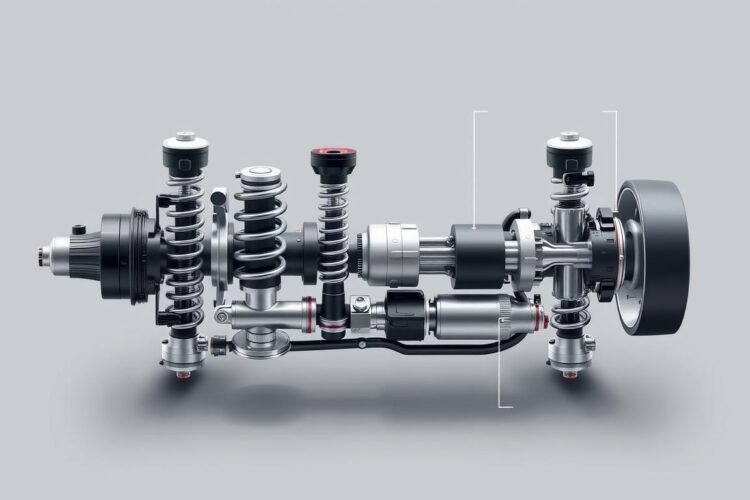
Have you ever felt your car glide effortlessly over a bumpy road, then tighten up for a sharp turn? That magic comes from smart engineering – and BMW’s system takes it to the next level. Let’s talk about why this tech matters for drivers who want both comfort and control.
Modern vehicles use clever setups to adapt to roads in real time. Instead of fixed parts that work the same way everywhere, these systems tweak themselves automatically. Think of it like shoes that adjust their grip whether you’re walking on ice or sprinting on pavement.
Some drivers swear by traditional setups, saying they’re simpler and cheaper. But here’s the thing: roads aren’t perfect. Potholes, gravel, and sudden curves demand flexibility. BMW’s approach uses sensors and software to soften or stiffen the ride instantly. Even the 3 Series, which has a basic version, shows noticeable improvements on mixed surfaces.
What’s wild is that many cars already have the hardware built in. You just unlock it through your dashboard or an app later. It’s like discovering your vehicle has a hidden superpower. Why does this matter? Because smoother rides mean less fatigue, and sharper handling keeps you safe when it counts.
Curious how this all comes together? We’ll break down the tech, costs, and real-world pros and cons. Ready to see how your drive could get smarter?
Adaptive M Suspension in the Evolution of BMW Performance
Remember when adjusting your ride meant stopping to tweak settings manually? Those days are gone. BMW’s journey from fixed to dynamic dampers mirrors how drivers’ needs have changed—demanding both precision and adaptability.
From Fixed to Adaptive: A Shift in Tuning
Older BMW models relied on fixed setups. Mechanics tuned springs and shocks for specific conditions—like a tailor making a suit for one occasion. But roads aren’t predictable. A 5 Series owner shared, “My car reads the road—soft on highways, firm on backroads.”
Here’s why the shift matters:
- Fixed systems: Offer consistent performance but struggle with mixed surfaces
- Dynamic setups: Use sensors to adjust damping every 2.5 milliseconds
- Software updates: Let drivers unlock new profiles post-purchase
Insights from Real-World Experiences
Enthusiasts debate which system feels better. One forum post noted, “The 3 Series’ dynamic dampers are good, but the 5 Series nails it.” Why? Larger models have more sensors and tuning flexibility.
Drivers love the choice between comfort and sport modes. A quick code tweak—often done via dealership software—can transform how the car behaves. Yet some purists argue fixed setups provide a purer driving feel. Which side are you on?
How adaptive m suspension Works
Imagine your daily commute feels like floating on clouds, but your weekend backroad drive responds like a track-ready machine. This isn’t magic—it’s smart engineering working behind the scenes. Let’s peel back the layers on what makes this possible.
Electronically-Controlled Dampers and Driving Modes
Think of the dampers as your car’s muscles. They flex or stiffen based on what’s happening right now. Sensors check the road 400 times per second. Hit a pothole? The system softens to absorb the shock. Take a sharp turn? It tightens to keep you planted.
Driving modes act like presets. Comfort mode prioritizes smoothness—ideal for highways. Sport mode sharpens responses for winding roads. Some drivers even customize settings for rain or gravel using their infotainment screen.
Unlocking the Technology: Software and Subscription Options
Here’s the twist: your car might already have the hardware. BMW builds these systems into many models from the factory. Activating them works like updating your phone’s OS. You choose between:
- A one-time purchase (own it forever)
- A monthly subscription (test it first)
The Connected Drive store handles these upgrades. It’s like an app marketplace for your vehicle. New features? They arrive via updates, keeping your ride fresh. One owner shared, “I added track mode six months after buying my car—felt like getting a free upgrade!”
So, would you prefer a setup that morphs from couch-soft to razor-sharp with a tap? That’s the beauty of modern engineering—it adapts so you don’t have to compromise.
Benefits, Pricing, and Practical Considerations
Ever wonder how your car handles both city potholes and smooth highways so seamlessly? Modern systems balance comfort and control in ways older setups couldn’t. Let’s explore what makes these upgrades worth considering—and how much they’ll cost you.
Enhanced Ride Comfort and Handling Dynamics
This tech transforms daily drives. Body roll shrinks during sharp turns. Bumps feel softer without making the car float. Steering stays precise even on uneven roads.
Think about gravel paths or cracked city streets. The system adjusts faster than you can blink. One driver said, “It’s like having a co-pilot tweaking the ride every second.”
Subscription Versus One-Time Purchase: What It Means for You
BMW offers choices. Pay $500 once to own the feature forever. Or try it monthly via Connected Drive. The 3 Series starts at $1,050, while the Z4’s package hits $2,750.
Why pick a subscription? Maybe you’re leasing or want flexibility. Others prefer the “set it and forget it” approach. Both paths use the same hidden code in your car’s software.
Performance Trade-Offs and Road Conditions
No system handles every road perfectly. Ice? Heavy rain? It adapts better than fixed setups but has limits. Sport mode grips winding roads tighter. Comfort mode soaks up highway vibrations.
Here’s the big question: Do you value consistency or adaptability? Your answer depends on where—and how—you drive. Either way, upgrading unlocks a wider range of what your car can do.
Wrapping Up: The Future of Automotive Suspension
What if your car could learn the road as you drive? BMW’s technology blends hardware smarts with software updates, creating rides that improve over time. This isn’t sci-fi—it’s how modern vehicles balance comfort and control.
The real magic lies in choices. Want a one-time purchase or a flexible subscription? Connected Drive lets you decide. Roads shape these systems, too. Bumpy highways teach cars to soften, while twisty backroads demand sharper responses.
Think about this: your vehicle’s suspension might already have hidden features. Software unlocks them later, like adding apps to your phone. Automakers now treat physical parts as updatable options—reshaping how we experience driving.
Tomorrow’s cars won’t just adapt to roads. They’ll predict them. Imagine cruising through a storm while your ride adjusts before you hit the puddle. That’s the future—where every drive feels tailor-made.
Ready to rethink what your car can do? The road ahead looks smoother—and more exciting—than ever.

