
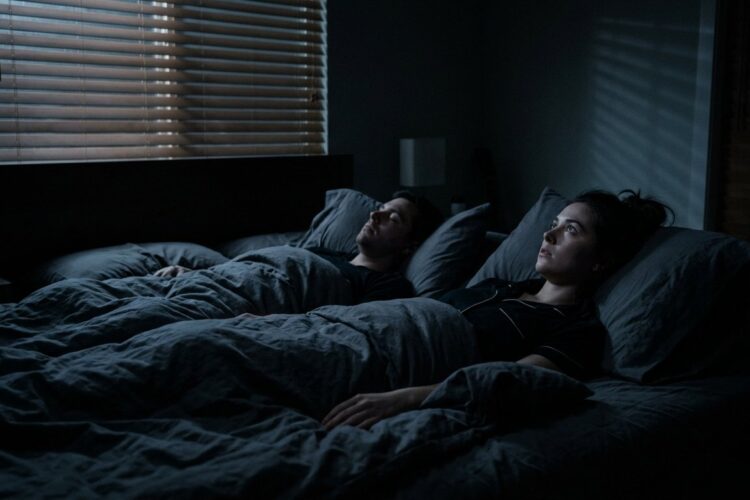
There is a sound coming through the bedroom door and I am standing in the hallway with a pillow under one arm, listening to it. It rises, catches, saws its way back down. Then it stops.
The stopping is the part I have never gotten used to. The quiet runs a beat longer than quiet should, and I catch myself counting without deciding to, and then the sound returns with a gasp on the front of it and the whole loop starts again. I have heard that loop more times than I can count, and for a long stretch of my life I filed it under noise, the way you file a dripping faucet or a neighbor’s dog.
Noise was the wrong file. I went looking for a better one, and I found it in a dental office, which is not where I expected the answer to be. Hillsboro Dental Excellence is a dentist near me who treats the airway rather than the noise, and after reading their website I asked them what that sound in my hallway is actually reporting, which turned out to be the behavior of a soft tube at the back of the throat when nothing holds it open.
Snoring is made out of tissue. Once you know that, it stops being a personality trait and starts being anatomy.
The sound is the collapse becoming audible
Air moving through a wide, firm passage is silent. You are doing it right now and you cannot hear yourself. The noise only shows up when the passage narrows and the walls of it go slack enough to flutter, and that is the whole mechanism. The tongue falls back toward the soft palate, the tissue there vibrates against it, and the vibration is what carries down the hall and through a closed door.
A tube that gives way
Two things make a throat collapsible. The passage can be narrow to begin with, which is a matter of how a face is built, and the tongue can be large relative to the room it has, which is the same problem approached from the other side. Muscle tone drops off while you sleep. Whatever was holding the walls apart lets go.
That is why the sound gets louder when someone rolls onto their back, and why it disappears when they prop themselves up. Gravity is participating.
The pause is the same event taken further. The walls do not merely flutter, they meet, and for those few seconds nothing is moving through at all. The gasp afterward is the airway being yanked back open. Loud snoring and obstructive sleep apnea keep close company, common enough that a dentist who hears about the first one starts asking about the second.
Why the mouth is where this lives
Here is the part that reorganized my thinking. The ceiling of the airway is the soft palate. The floor of it is the tongue. The uvula hangs into it. The walls of it are throat tissue, and the whole assembly is suspended off the jaw, whose position and width decide how much room there was in the first place.
Every one of those structures is dental territory. A dentist looks at that anatomy all day, from underneath, with a light on it, in a way that almost nobody else routinely does.
The medicine and the structure are separate jobs. Diagnosis belongs to physicians and sleep studies, and nobody I spoke to pretended otherwise. What belongs to the dental chair is the shape of the thing.
What a laser is doing back there
I assumed laser meant cutting. It does not, and I had to be told that twice before it landed.
Heat, collagen, and tension
The device is a dual wavelength laser system from Fotona, which puts an Er:YAG and an Nd:YAG in one handpiece, and the procedure is called NightLase. It deposits heat into the soft palate, the uvula, and the tissue around them without an incision anywhere. Collagen responds to heat by contracting and reorganizing itself. The tissue tightens, and the body reads the heat as a reason to lay down more collagen afterward.
What you end up with is a throat wall that is firmer than the one you started with. It is less inclined to give way when the muscles let go.
That is a different strategy than anything I had pictured. I had been imagining machines and mouthpieces that hold the airway open from the outside while you sleep and stop working when you take them off. This works on the material instead. The tissue is stiffer whether or not anyone is thinking about it, which is not nothing when the whole failure happens while you are unconscious.
What it is not
It is not surgery, and there is no cutting or burning involved. It is also not a magic trick, and the honest version has limits worth naming.
Nobody sells it as a cure. A collapsible airway has more than one cause, and a laser that firms up soft tissue does not rebuild a jaw or shrink a tongue. It takes a few sessions spread out rather than one visit, and the results are described in terms of reduction, meaning less collapse and less vibration, not a switch flipping from broken to fixed. If someone has apnea, they still have numbers, and those numbers are still a doctor’s business.
The same laser can be aimed at a nose that collapses inward on the inhale, a procedure they call Naselase, which tells you something about how this is being thought about. The target is the pipe. Wherever the pipe is failing, that is where the heat goes.
What the sound is worth listening to for
The reason any of this matters more than a snoring joke is that the pauses cost something. A throat that closes repeatedly is a body that keeps dipping its oxygen and hauling itself back up, and it does this without ever waking the person up enough for them to know. They report being tired. They do not report having stopped breathing, because they have no idea that they did.
And then there is the other person in the room, the one who does know, who is up in the hallway counting.
Back in the hallway
So I am standing there again with the pillow under my arm, and the sound is doing exactly what it always did. It rises, it catches, it saws back down. It stops.
Except now I know what the stop is. It is not quiet. It is a tube that has folded shut somewhere behind the tongue, walls touching walls, with a body on the other side of the door still trying to pull air through the closed thing. The gasp is not a snore. It is the reopening.
I do not resent the noise anymore, which is a strange thing to say about a sound that has cost me a lot of sleep. It is the only part of this that ever comes out where anyone can hear it. Everything else about a collapsing airway happens quietly, in the dark, to somebody who will not remember any of it.
I stopped standing in the hallway. I started asking about the tissue.

